
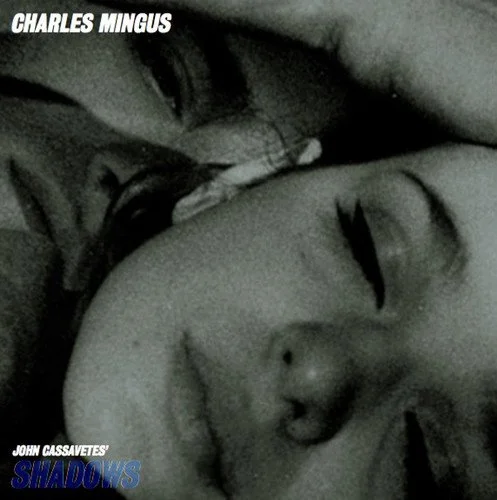
I was listening to Charles Mingus’ “Mingus Dynasty,” and when I looked over the liner notes, noticed that one of the songs, “Diane,” was written for the John Cassavetes film, “Shadows.” This was one of the first independent (non-studio) films—I recall seeing Cassavetes’ film “Woman Under the Influence” and others.
I thought it would be simple. Watch the movie. Listen to the music. Write something up. But that’s not what happened.
Cassavetes wanted an improvised score for his 1958 improvised film, and he asked Mingus for the score. A first showing of the film received some critical praise, but Cassavetes was unhappy with it. He reshot and reedited much of the film, and it was released again in 1959. This is the film that you see today. But the Mingus music was all but gone; only a few choruses here and there were left. Instead, a solo saxophone accented the action. (Although it was Mingus sideman Shafi Hadi.)
If this is the case, what’s up with the Doxy album, released in 2015, “Charles Mingus - John Cassavetes’ Shadows”?
Here are the four songs that Mingus wrote for the film. Three of them were recorded in 1959 and released on two different albums.
“Alice’s Wonderland” is found on the album “Jazz Portraits: Wonderland/Mingus in Wonderland” (United Artists). It’s a live album recorded at the Nonagon Art Gallery in New York City. A studio version of the song is also found on “Mingus Dynasty,” but it’s titled “Diane.”
“Nostalgia in Times Square” is also found on the Jazz Portraits album. The song also was added to a reissue of “Mingus Dynasty” (Columbia), using the title “Strollin’.” This version features a vocal by Honey Gordon.
“Self-Portrait In Three Colors” was released on “Mingus Ah-Um” (Columbia).
These three songs all appear on the 1998 album “The Complete 1959 Columbia Recordings” using the titles “Diane” and “Strollin.”
Finally, “Untitled Percussion Composition” is found on 1990’s “The Complete Debut Recordings.” Debut Records was founded by Mingus and drummer Max Roach and existed from 1952 to 1957. “Untitled Percussion Composition” was recorded in the 1950s and was never released until the Debut album.
When I look in Discogs, five versions of this release come up, two of which are 12-inch 45s. Four labels are involved: Doxy, DOL, Alternative Fox, and Destination Moon. I won’t go into the details when you click on the links to these labels and links found in the links, but in a nutshell:
“Doxy is a Russian bootleg label, specialized in vinyl reissues.” (https://www.discogs.com/label/168208-Doxy) and “The company owns several grey market and unofficial labels, including DOL, Doxy, Lilith, and Vinyl Lovers. Some of these labels issue out-of-copyright public domain releases, while others just issue pirate and counterfeit releases. It also issues local Russian artists' releases. These are primarily distributed in Europe but also via third parties around the world.” https://www.discogs.com/label/735743-Vinylogy-LLC?redirected=true)
A “grey” recording is one that is in, well, a grey area. Things like musicians’ rights, copyright, and licensing are not clear or are different between countries. It could be legal or illegal, depending on the country. The artist may or may not get any income.
So what about this album?
It’s a legal minefield. Copyright can be tricky to navigate, much less bringing in fair use, public domain, and multiple countries’ laws. The recording could be okay, or it could be someone pulling these songs off of their original albums and releasing them as the “Shadows” soundtrack, with no concern about asking for permissions.
So I never did get to the music or the movie in this post. Both of them are great. Go to a streaming service and give the music a listen. But try to find a cut from one of the original albums, not the Doxy label. The film or takes from the film can also be found on streaming services.
A note on the film
“Shadows” is considered a breakthrough, if not revolutionary film, for both its technique and its subject matter. Taking cues from the 1950s French “Nouvelle Vague” (New Wave) cinema of Jean-Luc Goddard and François Truffaut, Cassavetes shot outside the studio and on the streets of New York City. The film moves quickly, using the city as a set and hand-held cameras.
Socially, it’s a frenetic film, depicting the beat/jazz world of New York—parties where Blacks and whites mingle, bars, drinking, fighting, sexism—and tells the stories of Lelia, a light-skinned Black woman with 2 brothers: Hugh, a singer, and Ben, who plays trumpet. It depicts how they relate with each other and with society around them. Hugh struggles with his agent. Ben pals around with two white guys. Lelia is an artist who ditches one white boyfriend for another and is cold to a Black suitor. Conflict arises. Between Lilia and her men, among Lelia and her brothers, and between Ben and his friends. In the end, nothing is resolved.
https://www.charlesmingus.com/mingus-discography
https://www.discogs.com/master/1116572-Charles-Mingus-Shadows